
Pantera, “panther”, is the camouflage the Polish Armed Forces have worn since 1993: a four colour design of soft, paw-like blotches in black, dark green and brown on an olive green ground. Drawn up for the GROM special forces unit, it became the standard pattern of the whole Polish military and remains so today.
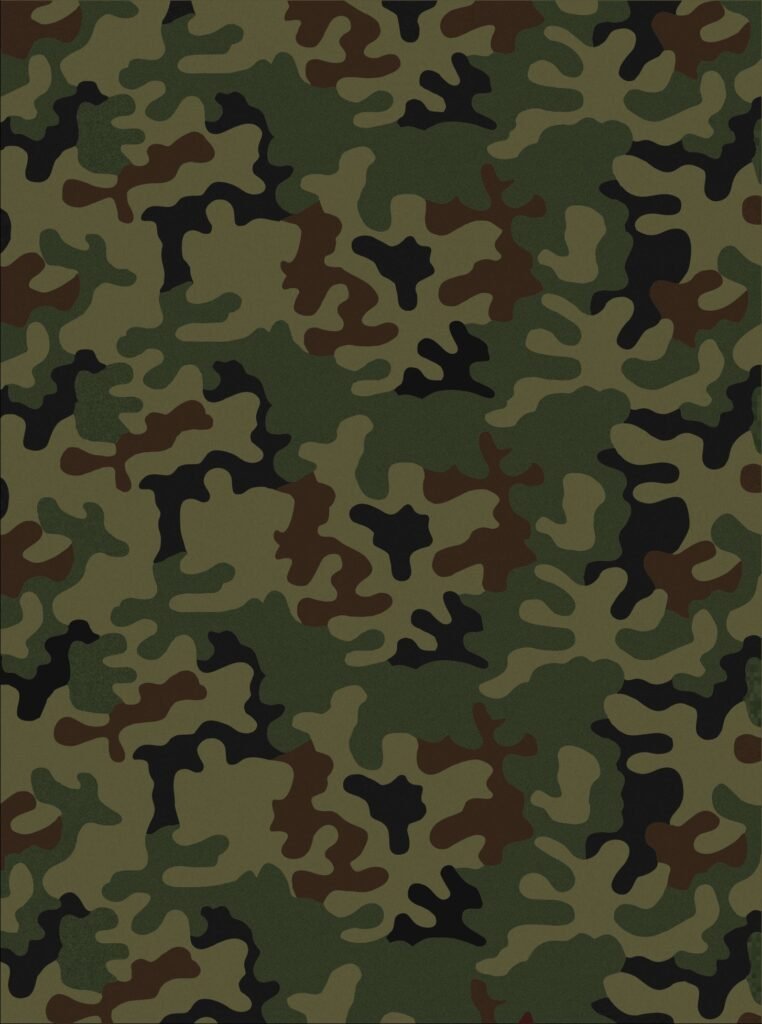
| Country | Poland |
|---|---|
| Pattern type | Four colour disruptive pattern |
| In use | From 1993 |
| Status | Standard pattern of the Polish Armed Forces |
| Colours | Black, dark green and brown blotches on an olive grey-green ground |
| Used by | Polish Armed Forces (all branches); first issued to airborne and cavalry brigades and to units serving on UN missions |
Design
The shapes are irregular, soft edged and of a similar size and geometry throughout, with no strong vertical or horizontal direction. The colour breakdown is usually given in order of coverage. The background, an olive green, is the largest element and stands for grass and young vegetation; dark green shapes come next, for the dark leaves of trees and shrubs; brown shapes stand for bark, leaf litter and soil; and the black spots are the smallest element but carry the strongest contrast, imitating shadow. The archived Kamouflage.net page lists the same four colours in slightly different words, black, dark green and red-brown elements on a medium grey-green background. The two descriptions are of the same palette; the background sits somewhere between olive and grey-green depending on the production run and the light. Pantera replaced the wz. 89 Puma pattern, and its stronger contrast was the point of the change: Puma’s quieter print disrupted the wearer’s outline less well. A desert version, Pantera pustynna, keeps the same shapes in sandy colours.
History
The pattern was created for JW GROM, the Polish special forces unit formed in 1990. Its path to general issue runs through a presidential photograph: in 1993 President Lech Wałęsa appeared at military exercises wearing GROM’s camouflage, and that year the pattern was introduced for all branches of the Polish Armed Forces as wz. 93. The archived page adds the issue order on the ground: airborne and cavalry brigades and units serving on United Nations missions received it first, and it then became the standard uniform of the Land Forces before spreading across the services. Its first combat use came with Polish troops serving in UNPROFOR during the wars in Yugoslavia. At the start of the 2000s, Polish deployments to Iraq and Afghanistan brought the desert version, which the archived page dates to March 2002; the shapes are a straight colour translation of the woodland design, with no attempt to imitate desert forms. Pantera is printed on far more than uniforms: helmet covers, plate carriers and packs are all issued in it. From 2014, and again after 2022, quantities of Polish uniforms and equipment in Pantera were handed over to Ukraine. The archived page also records two older nicknames for the pattern, Petal and Presidential; the second at least is easy to explain.
Identification notes
Against its predecessor, the wz. 89 Puma: Puma’s shapes are smaller, sparser and lower in contrast, on a similar green palette, so a quiet, washed-out looking Polish print is Puma and a bold one with strong black spotting is Pantera. Against the American M81 woodland family, which it is sometimes compared with side by side: woodland shapes are larger, longer and branch across the cloth, where Pantera’s are compact, rounded and evenly spread, with no long horizontal runs. Against the other Polish page in this database, the Metro urban pattern: Metro is a grey urban scheme of the same era, and palette alone separates it from the green woodland Pantera at a glance. The desert Pantera keeps the woodland shapes exactly, so shape identifies the pattern and colour identifies the version.
Related patterns: Polish ‘Metro’ Pattern (wz AT 1 PLAMIAK).
Swatch image: wz. 93 Pantera, drawn by NotNiko13, CC BY-SA 4.0, via Wikimedia Commons.